Tuesday, May 24, 2011

‘Anarchist’ Idiocy
 By David Boaz 
The Washington Post splashes a story about “anarchists” in Greece [1] across the front page today. The print headline is “Into the arms of anarchy,” and a photo-essay online [2] is titled “In Greece, austerity kindles the flames of anarchy.” And what do these anarchists demand? Well, reporter Anthony Faiola doesn’t find out much about what they’re for, but they seem to be against, you know, what the establishment is doing, man:
The protests are an emblem of social discontent spreading across Europe in response to a new age of austerity. At a time when the United States is just beginning to consider deep spending cuts, countries such as Greece are coping with a fallout that has extended well beyond ordinary civil disobedience.
Perhaps most alarming, analysts here say, has been the resurgence of an anarchist movement, one with a long history in Europe. While militants have been disrupting life in Greece for years, authorities say that anger against the government has now given rise to dozens of new “amateur anarchist” groups.
Faiola does acknowledge that the term is used pretty loosely:
The anarchist movement in Europe has a long, storied past, embracing an anti-establishment universe influenced by a broad range of thinkers from French politician and philosopher Pierre-Joseph Proudhon to Karl Marx to Oscar Wilde.
So that’s, let’s see, a self-styled anarchist who was anti-state and anti-private property, the father of totalitarianism, and a witty playwright jailed for his homosexuality.
Defined narrowly, the movement includes groups of urban guerillas, radical youths and militant unionists. More broadly, it encompasses everything from punk rock to WikiLeaks.
And what are these various disgruntled groups opposed to?
The rolling back of social safety nets [3] in Europe began more than a year ago, as countries from Britain to France to Greece moved to cut social benefits and slash public payrolls, to address mounting public debt. At least in the short term, the cuts have held back economic growth and job creation, exacerbating the social pain.
And Greece is not the only place in which segments of society are pushing back.
So these “anarchists” object that the state might cut back on its income transfers and payrolls. That is, they object to the state reducing its size, scope, and power. Odd anarchists, as George Will told the crowd [4] at the 2010 Milton Friedman Prize for Advancing Liberty dinner:
It leads to the streets of Athens, where we had what the media described as “anti-government mobs.” Anti-government mobs composed almost entirely of government employees going berserk about threats to their entitlements!

Realism in action

On 60th anniversary of Tibet's incorporation, China 'owns' the history books
Western media aren’t paying much attention to what happened in Beijing 60 years ago today, which means the People’s Republic of China are free to have a field-day with it. If the 17-point agreement signed on May 23, 1951, was indeed a good thing for Tibet, then there’s never been a better example of history belonging to the victors.
“History will be kind to me for I intend to write it,” Winston Churchill once said. Which was kind of a watered-down version of his more famous utterance on the subject, the one that achieved the aphoristic in its claim that “history belongs to the victors.” And given that Churchill himself could make such statements, what’s to stop the central government in Beijing – or anyone else for that matter – from putting them into action? Because if the headlines in China’s major state media organs are to be believed, today (May 23, 2011) is the 60th anniversary of Tibet’s emancipation from a feudal and repressive political system.
“Tibet marks 60th anniversary of peaceful liberation,” Xinhua, the People’s Republic’s largest newswire, proclaimed. The piece opened with a description of pilgrims prostrating themselves at the foot of the “stunning” Potala Palace in Lhasa, “under the five-star flag”. It then went on to quote Qiangba Puncog, chairman of Tibet's regional legislature, who said: "[May 23] is a historic date for all the Tibetans. It opened a new chapter in Tibet's history... and ushered in a new period of national unity and rapid development." After remarking on the flowers presented at a monument commemorating the peaceful liberation in 1951, the piece noted that “the crowd went silent to mourn the heroes who died in the fight for Tibet's liberation, socialism building and economic development.”
It was this last part that CCTV, the leading national television network of the People’s Republic, focused on most strongly. Interviewing students at the Chengguan Primary School in Lhasa, the network highlighted how Chinese intervention is preparing young Tibetans for a global marketplace. “Why do you want to study English?” the reporter asked one student. “Because I want to study abroad,” he answered. According to the 11-year-old, “those who study abroad are really cool” and “have a lot of style.” The television report, which was titled “Tibetans rediscover their roots,” ended with a less-than-subtle claim that the digitisation of the Tibetan language (under the auspices of Beijing) is reintroducing students to their fading mother tongue. 
Of course, the “Free Tibet” association views the consequences of the events of May 23, 1951, slightly differently. This famous not-for-profit points out on its website that in early October, 1950, 40,000 Chinese soldiers invaded Tibet and overran its small army; when the Tibetan appeal to the United Nations was blocked by India and Britain, the country had no option but to negotiate with the Chinese People’s Government. According to Free Tibet, the preamble to the 17-point agreement, which was signed in Beijing on May 23, 1951, “stressed that Tibet had a ‘long history within the boundaries of China,’ outlined the aggressive imperialist forces in Tibet that needed to be ‘successfully eliminated,’ and claimed that both parties (Tibetans and the Chinese People's Government) had, as a result of talks, agreed to ‘establish the agreement and ensure that it be carried into effect’.” The agreement paved the way, as per the organisation, for widespread human rights abuses – including the torture of political prisoners, and mass restrictions on religious freedom and freedom of speech. As a consequence, an average of 3,000 Tibetan refugees are said to cross the Himalayas into exile every year.
But then why the international media’s silence on the issue? As of this writing, at about noon on the 60th anniversary of the signing, Google news is registering less than a dozen articles on the subject – and most of these dozen are from the abovementioned official Chinese sources. In another Xinhua article, China's top political advisor, Jia Qinglin, was quoted saying that “Tibet is an inseparable part of China,” and the headline again employed the phrase “peaceful liberation”. Does Western media believe this to be true, or is China’s political and economic influence now so large that it impinges on the West’s ability to see the wood for the trees?
The answer, most probably, is neither of the above. According to a Tibetan activist quoted in an article in the Canberra Times (of all places), the day is nothing more than a “propaganda exercise” for the People’s Republic – and a low-key one at that. For the Dalai Lama and the Tibetan government-in-exile, by far the more important day is the anniversary of the March 10, 1959, uprising, when a popular revolt erupted in Lhasa. Given that on this day the international media also appears relatively interested in the plight of Tibet, the same can most likely be said of them too


Charity begins (and ends) at home

How the BBC spends Britain's international aid
A little-known charity run by the BBC is spending more than £15 million from the UK taxpayer on “international aid” projects including “educating” Africa on climate change and a “romantic” soap opera for Indian radio.
The charity, the BBC World Service Trust, employs nearly 600 staff based in London and around the world. It gets a further £800,000 a year in financial backing from the BBC, as well as funding from other sources.
Last year it spent more than £28 million on “changing lives through media and communication”. It also produces foreign sex education films, including one staring an Asian beauty queen emerging from a bath and seductively encouraging men to use a condom.
The revelation comes in the wake of the row over the Government’s decision to protect Britain’s overseas aid budget while imposing huge cuts on defence and other public spending.
On Saturday the disclosure was condemned by MPs who questioned why taxpayers’ money was being spent in this way and whether the Trust’s relationship with Whitehall departments, business donors and foreign governments damaged the BBC’s independence.
“You imagine that our foreign aid budget is being spent to save lives by pumping fresh water to a drought-ridden village, not to make soap operas,” said Philip Davies, a Tory member of the Commons culture committee.
In recent years the Trust has spent millions of pounds from the taxpayer including:
£2.6 million on “Sanglap” a satellite television and radio programme in Bangladesh which is described as “Question Time-style ... enabling audiences to hold politicians to account”.
£2 million on a radio soap opera, “Mandalay Road”, about health care and Aids in Burma
Daily reports from the war crimes trial of Charles Taylor, the former Liberian leader, with the BBC sending experienced correspondents to mentor African reporters covering the case
£2.5 million on a project highlighting “the importance of Information and Communications for Development”.
The BBC Trust gets additional public money from the Foreign Office-funded British Council, the European Union and the United Nations, as well as cash from Microsoft founder Bill Gates’s charitable foundation.
The charity is separate from the Foreign Office-funded BBC World Service, which runs the Corporation’s long-established foreign language stations around the world, and which broadcasts some of the Trust’s programmes.
Whilst the World Service is facing massive budget cuts, the Trust appears to have been unaffected so far by the economy drive. It has seen its budget grow tenfold since it was set up in 1999, including spending more than £5 million a year on salaries.
Caroline Nursey, its executive director and a former senior official at Oxfam, earns between £90,000 and £99,000 a year. At least three other executives are paid more than £80,000.
Its board of trustees is headed by Peter Horrocks, the director of the BBC World Service, and includes George Alagiah, the presenter of the Six O’clock News on BBC One.
Despite its rapid growth, the Trust is currently carrying out a “rebranding” exercise to raise awareness of its work within the BBC. Last year the charity sent a “sensory tent” with “a soundscape featuring ... voices by Sir David Attenbourgh (sic)” on a tour of the Corporation’s regional offices.

Monday, May 23, 2011

Serial Killer on the loose

Putin: KGB Gang$ta for Life


When I was a youngster in Brezhnev’s Russia, I was taught that wealth was relative. Though most people in the West were comfortable, they were poor by comparison to the rich, a problem we didn’t have. That’s why, on balance, we considered ourselves better off.
We knew the party elite were wealthy. They lived in large flats. Had country houses. Owned decent furniture and electronic equipment. Ate good food. Wore good clothes. Though we didn’t know this at the time, they lived—at best—as well as middle-class Westerners.
Glasnost and perestroika changed that lamentable situation. A giant transfer of capital abroad ensued, with the elite using “appointed” oligarchs as the conduit. But all those Abramoviches and Berezovskys acquired use of the capital, not its ownership. They were the leaseholders, with the freehold in the hands of a new elite made up of party functionaries, KGB officers, and underworld types. Overnight the new elite’s language acquired a new noun (dollars) and a new numeral (1,000,000,000). Gorbachev, immediately after leaving office in 1991, started a foundation said to be initially capitalized at $8 billion—not bad for a man whose monthly salary had been around $2,500.
In a 2007 interview to the German paper Die Welt, the political scientist Stanislav Belkovsky estimated Putin’s wealth at $40 billion. Belkovsky provided a quick rundown of Putin’s business interests: a 4.5% holding in the world’s largest gas producer Gazprom, along with 37% of Russian oil and gas giant Surgutneftegaz, and “at least 75%” of the oil trader Gunvor. (Putin vehemently denied this one.)
I have reviewed the Russian-language facsimile of a Federal Security Service dossier on Putin first published in the Russian papers Moskovsky Komsomolets and Versia and now reappearing on the website Compromat.ru. The dossier is in the standard format used by the FSB to collate embarrassing material on high government officials. In this instance it chronicles Putin’s activities in St. Petersburg where, before his transfer to Moscow, he was second in command to Mayor Anatoly Sobchak.
The dossier states that Putin’s “quest for personal enrichment and absence of any moral barriers became obvious at the very onset of his career.” As early as 1990 a group of Municipal Council deputies “conducted an investigation of Putin’s activities in issuing licenses for the export of raw materials.” In particular, the investigation dealt with export licenses to exchange raw materials for food. Such materials dutifully left Russia. No food came back.
“Can we in good conscience do business with Col. Putin?”
According to documents cited by Russia’s then-Deputy General Prosecutor Mikhail Katyshev, Putin also used the children’s home of Petersburg’s Central Borough to “export” children abroad, a practice outlawed in Britain since 1807.

Costs are prices too

Problems with the Cost Theory of Value


by Robert P. Murphy 
One of the most important developments in the history of economic thought was the so-called Marginal Revolution of the early 1870s, in which the older cost (and more specifically, labor) theory of value was overturned by subjective value theory. This was an unambiguous advance in the science of economics, analogous to the superiority of Einsteinian relativity over Newtonian mechanics. The revolution is of special importance for Austrian economists, since Carl Menger — founder of the Austrian School — is credited as one of the three pioneers of the new approach.
In the present article, I'll explain a generic cost theory approach and point out some of its major shortcomings. In a future article, I'll show how the modern, subjectivist approach has more explanatory power and avoids all of these pitfalls.
A Generic Cost Theory of Value
In a short online essay, I don't want to get bogged down with quotations from specific economists from the past. Instead, I will try to present a generic version of the cost theory of value in order to summarize the viewpoint. The classical economists — including such giants as Adam Smith, David Ricardo, and Frederic Bastiat — had nuanced treatments of the subject in their writings, but all generally adhered to some form of the cost theory (and more specifically, a labor theory of value, which Karl Marx adopted from the other classical economists). Those who want a more academic treatment, dealing with arguments from proponentsof the cost theory, should consult this article.Description: Download PDF
The Purpose of Economic Value Theory
The purpose of economic value theory — whether a cost, labor, or subjective approach — is to explain the prices of various goods and services in a market economy, i.e., to explain their "market value." For example, why is it that gold bars and automobiles are so valuable, while tinfoil and tube socks are not?
Explaining the formation and magnitudes of various market prices is not the sole task of economic theory, but it is a crucial component of it. The cost theory of value is a legitimate approach, and it did shed some light on the subject. But in light of the flaws we will discuss, the cost theory was ultimately displaced by a more satisfactory explanation.

Public schools and civic decline

The Candy-Cane Cops 
by Hans von Spakovsky
People who are supposed to be teaching our children civics want to deny them the protection of the Constitution.
It’s known as the candy-cane case. And it’s all about religious discrimination.
The Fifth Circuit Court of Appeals will hear oral arguments today in Morgan v. Swanson. The case demonstrates just how badly political correctness has corrupted our public schools and illustrates the extremes to which radical school administrators will go to impose their ideological, anti-religious views on our children.
The lawsuit was filed by the families of several elementary-school students in Plano, Texas. The suit states that, although the schools hold birthday and “winter break” parties, no Christmas parties are allowed. Moreover, the schools ban all “references to and symbols of the Christian religion and the celebration of the Christian religious holiday, Christmas,” at the winter-break parties. Even “red and green Christmas colors” are banned. And students were explicitly instructed “not to write ‘Merry Christmas’ on greeting cards sent to United States soldiers [or to retirement homes] because that phrase might be offensive.”
Apparently the schools never considered that such rigorous censorship might be offensive. Indeed, they went further. Students were allowed to exchange gift bags at the winter-break parties. However, the suit alleges, “students and parents [were] interrogated by school officials . . . as to whether or not the contents of their gift or ‘goodie’ bags . . . contain any religious viewpoint, religious references or religious message.” If they did, the bags were confiscated by school officials.
One student’s bags were seized because they contained pencils inscribed with the phrase “Jesus is the Reason for the Season.” Another student was banned from giving his friends candy-cane-shaped pens with a laminated card entitled the “Legend of the Candy Cane,” which explained the Christian origin of candy canes. Another student, “during noncurriculum times and with no material and substantial disruption to the operations of the school,” was giving her friends tickets to a free Christian drama production at her church. Principal Jackie Bomchill ordered the tickets confiscated and destroyed because they “expressed a ‘religious’ viewpoint.”
One student’s mother asked for a meeting with Bomchill to get prior approval for her daughter to give her friends two pencils at her own birthday party during lunch recess, one inscribed with the word “moon” and the other with the phrase “Jesus loves me this I know for the Bible tells me so.” Instead of engaging in a calm discussion, the principal handed the mother a letter threatening that “law enforcement officials” would be called to arrest her and told her that the Jesus pencils could only be distributed “outside of the school building.” However, when the daughter attempted to do just that, outside of the school building, Bomchill grabbed her, took the pencils, and berated her. Bomchill told the mother her daughter would be “kicked out of school” if she made any further attempts to distribute religious items. School officials even called the police, who pulled over the mother on her way home.
Since these events, the school district and the principals have only compounded their errors. Rather than acknowledge that they made a mistake, apologize, and change their discriminatory policies, they have spent over a million taxpayer dollars fighting this lawsuit all the way up to the federal appeals court. In fact, they claim that they did nothing wrong and should be granted “qualified immunity” because “the First Amendment does not apply to elementary school students” and the “Constitution does not prohibit viewpoint discrimination against religious speech in elementary schools.” And these are the people teaching civics to our children!

Fifty years ago, the Holocaust was suspended

A suspension of barbarity

by Jeff Jacoby

FIFTY YEARS AGO, they keep saying. Fifty years ago, Auschwitz was liberated. Fifty years ago, the Nazis were defeated. Fifty years ago, the survivors emerged from the ash and bones and hell of the death camps. Fifty years ago, the world, sickened to discover how unspeakably deep and black was the abyss into which one of the most cultured nations on earth had systematically ground up 6 million Jews, swore: Never again. Fifty years ago, the Holocaust ended.
Fifty years ago.
Ended?
In the Cleveland synagogue I grew up in, there was a woman named Esther, a survivor of the camps. Over the years I watched her mind slowly disassemble, pulled apart by memories too violent to endure. She would burst into shouts during the rabbi's sermon and madly rush to kiss the Torah scroll as it was carried to the ark. When charity appeals were made from the pulpit, she would wave in the air, of all things, Czechoslovak stamps, crying out that she had something of great value to donate. I got hold of one of those stamps once and looked it up in a catalog. It was worthless.
When, exactly, did the Holocaust end for Esther?
In the same synagogue was a man called B--, an envelope maker who had no children and who we all somehow knew never would. What B-- lost in the camps wasn't his life, but something even more precious: all hope of giving life. During the war, he had been sterilized in one of Dr. Mengele's sadistic experiments.
When did his Holocaust end?
When did my father's?
On May 7, 1945, the concentration camp at Ebensee, an Austrian town between Linz and Salzburg, was abandoned by its Nazi guards. Among the Jews not yet dead in that place was my father. He was 19 years old, he weighed 65 pounds, and he was nearly gone with starvation and typhoid fever. Thirteen months and three camps earlier, on his first day in Auschwitz, he had seen his parents sent to the gas chamber, along with his 10-year-old brother Yrvin and his little sister Alice, who was 8. My father's teen-age brother Zoltan was murdered a few days later; his older sister Franceska by the following spring.
When the Nazis fled Ebensee on that May morning 50 years ago, my father was left with nothing but the rags he was wearing and a greenish-blue tattoo on his arm: A-10502.
And feelings of guilt that have lasted for decades.
"I had dreams and nightmares about what happened," he said to me once. "I always feel sort of guilty, even until now, about not protecting my younger brother. I was with him together for a just a few hours; then we were separated. I wonder -- could I have insisted that he stay with me? I don't know. Coming from a farm, I was naive. I was not sophisticated."
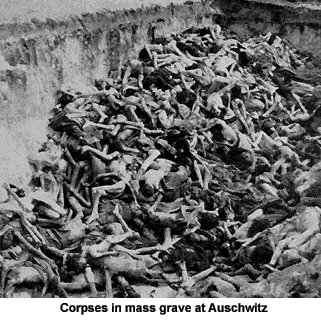
Between 1940 and 1945, it was a central aim of the German Reich to exterminate every Jew in Europe -- to bring about, once and for all, a "Final Solution" to the Jewish "problem." To carry out this policy, which was given a higher priority than even the war effort, the Nazis constructed a vast and elaborate machinery, employing tens of thousands of people and requiring the most detailed and complicated logistics. It was an industry whose raw material was Jews, which it imported from lands as far-flung as Greece and Norway, and whose final product was Jewish corpses, or the greasy smoke of Jewish corpses. To ensure its success, the Nazis drew on all the resources of wealth, science, engineering, transportation and manpower at their command.
And my father has felt guilty for 50 years because he didn't know how to save his brother.
Has his Holocaust ended?
I mistrust this number, this 50. It seems too definitive a milestone, too complete, too over-and-done-with. When I hear the words "ended 50 years ago," it seems to me I also hear: "Enough already." "Let it go." "It's history."
Is it?
On an NPR broadcast two weeks ago, an articulate skinhead named Tracy Gilson was asked why he has Hitler's face tattooed on his neck.
"The Holocaust," replied the young man, who became a skinhead at 13. "You know what? If it did happen, good. I don't care. I'm glad. I really -- that's good. That's great. Swell, good. Kill 6 million more, somebody, please. . . . I wish somebody would do that here, freakin' decide that they need to get rid of all the trash and start building death camps. That would be fine with me."
The Holocaust didn't end 50 years ago; it was only suspended. What separates us from 8-year-old girls gulping death in gas chambers is nothing more than a thin veneer of civilization, stretched like a bandage over a bleeding wound, capable of being stripped away in a twinkling. Germany is the land of Bach and Durer and Goethe, after all. Yet how readily it became the land of Buchenwald and crematoria and pits filled with naked, machine-gunned Jews.
There is nothing so evil, so demonic, that people cannot be induced to do it, or to look the other way while it is being done. Not only storm troops and skinheads. Nice people. Cultured people. People like us.
Fifty years ago, the Holocaust was suspended. How long it stays suspended depends on how long we remember to never forget. Fifty years after the spring of 1945, when even those who survived are almost all gone and wildflowers grow where dead parents and dead children were once piled high, we need to remember more urgently than ever.

Sunday, May 22, 2011

Tyranny at work

Would you like to forfeit your house?

Imagine a guest with a marijuana cigarette secretly tucked in his pocket visits your house. The police storm in, seize the cigarette, and arrest your guest for drug possession. The police then announce that the government now owns your house.  “What?!” you wail, “I did nothing wrong. How can you take my house?”

You are told that civil-forfeiture law allows government to take property that harbored an “abatable nuisance” – illegal drugs, in this case. An officer explains that “Your house, not you, committed a wrong. To help stem drug trafficking, it must be seized. Your doubts about our ability to confiscate your property will be dispelled by reading the Supreme Court’s March 4th decision in Bennis vs. Michigan.”
Certain that such tyranny is impossible in America, you rush to readBennis. Your heart sinks. Chief Justice Rehnquist explains that the Constitution permits Michigan to use civil forfeiture to strip Tina Bennis of her ownership of an automobile in which her husband John had a tryst with a prostitute. Civil forfeiture allows government to take property from someone without convicting that someone of a crime.
Everyone concedes that Mrs. Bennis was unaware that John used the car for illegal sex – for which he was convicted and fined $250. Still, according to the Court, Michigan violated neither the Due Process nor the Takings clauses of the Constitution by taking the innocent Mrs. Bennis’ property without as much as a “thankee, ma’am.” The court reasoned that the state’s confiscation and forfeiture of Mrs. Bennis’ car is constitutional because courts have long upheld civil-forfeiture seizures of some properties.  But these were historically confined to properties whose owners could not be tried in domestic courts. Not until Prohibition – long after the Constitution was adopted – did government generally wield civil forfeiture against people who could easily be criminally prosecuted.
Traditionally, no one can be punished unless first convicted. And government cannot convict someone – nor forfeit his property – who is denied an opportunity to defend himself before an impartial jury. But what to do about criminals outside of a domestic court’s jurisdiction? This was a pressing question for courts in cases involving smuggled goods as well as ships used for smuggling or piracy on the high seas. Owners of these properties were typically outside of domestic jurisdiction. Unless the law found a practical way to punish these foreign owners, smuggling and piracy would continue unabated.

The root of all evils (medical evil that is)


Scientific American

Mummy Says John Horgan Is Wrong about Fat andCarbs in Food


I was struck today by the juxtaposition of two recent articles here at ScientificAmerican.com. In “Thin Body of Evidence,” John Horgan expresses his skepticism about journalist Gary Taubes’s claims that carbohydrates, not fat, are the cause of obesity, heart disease and other health problems faced by many Americans. In “Mummy Says Princess Had Coronary Disease,” scientists who performed a CT scan on a 3,500-year-old Egyptian mummy express their puzzlement that this ancient princess had advanced atherosclerosis (hardened arteries) despite her civilization’s “healthy” diet that included wheat, barley, bread and beer—and only small amounts of meat.
Atherosclerosis is linked to high blood levels of triglycerides (a type of fat molecule) and low levels of HDL cholesterol, the “good” cholesterol. Eating a lot of carbohydrates (such as wheat, barley, bread and beer) is well known to raise triglycerides and lower HDL. Eating fat (such as found in meat) counteracts these effects, raising HDL and lowering triglyceride levels. The Egyptian princess’s diet, therefore, is the perfect recipe for high triglycerides and low HDL—and for atherosclerosis.
These facts about diet and blood lipid levels are not controversial—they have been known for decades and verified repeatedly by scores of studies. So why were the anthropologists surprised by the mummy’s atherosclerosis? And why is Horgan resistant to the idea that carbohydrates cause obesity and desease? The answer lies in two all-too-human tendencies: over-reliance on personal experience and resistance to information that contradicts our beliefs.
Horgan and the anthropologists who studied the mummy are falling victim to their preconceived notions about nutrition—that whole grains are healthy and animal fats are dangerous. They can hardly be blamed; those ideas have been trumpeted as truths for three decades in this country. But those notions were never based on good science, and now evidence is mounting that they are just plain wrong. Taubes details that evidence masterfully in Good Calories, Bad Calories (Knopf, 2007) and Why We Get Fat (Knopf, 2010).