Saturday, June 22, 2013

How Syria's Islamists govern with guile and guns

The Shape of Things to Come
By Oliver Holmes and Alexander Dziadosz
The Syrian boys looked edgy and awkward. Three months ago their town, the eastern desert city of Raqqa, had fallen to rebel fighters trying to overthrow President Bashar al-Assad's government. Now the four boys - clad in tight jeans and bright T-shirts - were whitewashing a wall to prepare it for revolutionary graffiti.
"We'll make this painting about the role of children in the revolution," one of the boys told two journalists.
A white Mitsubishi pulled up and a man in camouflage trousers and a black balaclava jumped out and demanded that the journalists identify themselves. He was from the Islamic State of Iraq, he said, the Iraqi wing of al Qaeda linked to an Islamist group fighting in Syria called Jabhat al-Nusra.
The boys kept quiet until the man pulled away, and then started talking about how life has changed in the city of around 250,000 people since the Islamists planted their flag at the former governor's nearby offices.
"They want an Islamic state, but most of us want a civilian state," the boy said. "We're afraid they're going to try to rule by force."
As he finished his sentence, the same white car roared back round the corner. This time two men, both in balaclavas and holding Kalashnikov assault rifles, stepped out.
"Painting is forbidden here," one fighter said. The graffiti was too close to the group's headquarters. One of the boys made a brief, almost inaudible protest.
"We're sorry," the fighter said. "But painting is forbidden." His comrade stroked his long beard and said: "We are not terrorists. Don't be afraid of us. Bashar is the terrorist."

Venezuela Imploding Like the Soviet Union

The answer : "more and more socialism"
By Fabio Rafael Fiallo
The crumbling of the Soviet bloc in the late 1980s demonstrated two things: One, that deep-seated economic inefficiencies could force a political system to implode; and two, that such an implosion could be hastened by the ideological obstinacy of its leaders. 
The state's mismanagement of the economy -- exacerbated by the Cold War arms race against the U.S and the cost of the invasion of Afghanistan -- left in tatters the once powerful Union of Soviet Socialist Republics (USSR). Thus, in 1985, when Mikhail Gorbachev succeeded the visionless and ideologically-corseted Konstantin Chernenko at the summit of power in the USSR, he couldn't but realize that the Soviet system lacked economic oxygen to continue playing a superpower. Four years later, the Berlin Wall crumbled.
The current situation in Venezuela -- under the Chavez-designated heir and proclaimed winner of a tainted election Nicolás Maduro -- is similar to, and no less untenable than, that of the Soviet Union at the time of Chernenko.
The misallocation of resources brought about by price and foreign exchange controls, the wasting of oil revenue in the funding of domestic patronage and regional alliances, as well as the paralysis of private investment due to the government's hostility against the entrepreneurial class, have taken a heavy toll on the Venezuelan economy. Rampant inflation, multiple devaluations and chronic shortages of essential goods form just part of the hardships enjoyed by the Venezuelan population.
Gone are the days when Hugo Chávez boasted about being able to cut oil exports to the "Empire" (i.e. America). More than ever before, the Venezuelan regime badly needs the foreign exchange generated by such exports.
As a matter of fact, oil sales to other countries do not provide as much fresh foreign exchange as do the corresponding exports to the United States. Although at a 30-year low, exports of oil to the U.S. are still 50 percent higher than those to China. Moreover, out of the 640 thousand barrels per day that Venezuela ships to China, 30 percent is destined to pay back the debt contracted by Hugo Chávez with Beijing ($42.5 billion).

Obama hits a wall in Berlin

A bad start for second term
By George F. Will
The question of whether Barack Obama’s second term will be a failure was answered in the affirmative before his Berlin debacle, which has recast the question, which now is: Will this term be silly, even scary in its detachment from reality?
Before Berlin, Obama set his steep downward trajectory by squandering the most precious post-election months on gun-control futilities and by a subsequent storm of scandals that have made his unvarying project — ever bigger, more expansive, more intrusive and more coercive government — more repulsive. Then came Wednesday’s pratfall in Berlin.
There he vowed energetic measures against global warming (“the global threat of our time”). The 16-year pause of this warming was not predicted by, and is not explained by, the climate models for which, in his strange understanding of respect for science, he has forsworn skepticism.
Regarding another threat, he spoke an almost meaningless sentence that is an exquisite example of why his rhetoric cannot withstand close reading: “We may strike blows against terrorist networks, but if we ignore the instability and intolerance that fuels extremism, our own freedom will eventually be endangered.” So, “instability and intolerance” are to blame for terrorism? Instability where? Intolerance of what by whom “fuels” terrorists? Terrorism is a tactic of destabilization. Intolerance is, for terrorists, a virtue.
It is axiomatic: Arms control is impossible until it is unimportant. This is because arms control is an arena of competition in which nations negotiate only those limits that advance their interests. Nevertheless, Obama trotted out another golden oldie in Berlin when he vowed to resuscitate the cadaver of nuclear arms control with Russia. As though Russia’s arsenal is a pressing problem. And as though there is reason to think President Vladimir Putin, who calls the Soviet Union’s collapse “the greatest geopolitical catastrophe of the century,” is interested in reducing the arsenal that is the basis of his otherwise Third World country’s claim to great-power status.

Wind Farms and the Tyranny of the Elites

Ceausescu would have loved 'em
By James Delingpole
Wind farms are like one of those frustratingly unripened boils: you know that you shouldn't keep squeezing but they're so noxious and irritating and hideous that you just can't resist. If you've got the same problem, then I heartily recommend you read this brilliant essay on the subject by Russell Taylor.
I love his dismissal of people who claim to find wind turbines beautiful:
  "….a sentiment I find as credible as a Soviet peasant admiring the Tiger tank that had just squashed his grandmother."
But what really grabbed me was his analysis at the end of wind turbines' totemic significance to the left. I've touched on this before myself. It's why I christened them "eco-crucifixes", because they're not really about viable energy or even saving the planet but rather, like "stranded" polar bears on melting ice floes, an emblem of the ubiquity and dominance of the new global religion. And it's why, in the past, I have likened them to the fortress-like cathedrals the Catholic church erected to crush the resistance of the Cathar 'heretics' in South West France.
Taylor has a cleverer take:
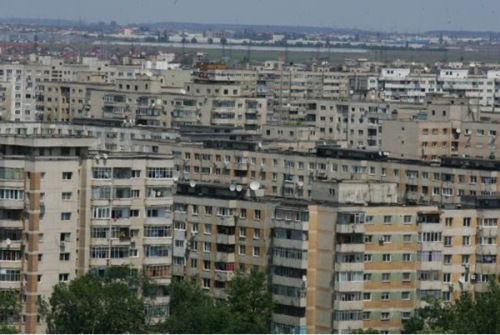
Wind turbines serve an additional purpose for the Left, similar to that performed by the tower blocks Ceausescu built in the middle of farmland, or the factories found on the horizon of Soviet rural scenes: they are statements of power. These steel sentinels remind country-dwellers that they are within the gravitational pull of the capital’s dark star, and that if they believe they are free to reject the beliefs of the metropolitan elite, they can think again.
The countryside has long been an object of suspicion for liberal townies, who consider it a viper’s nest of erroneous thought, inhabited by toffs, retired colonels, golf-playing Rotarians and other conservative bogeymen. The propensity of country folk to choose their own values, to observe age-old traditions and to rely on each other to get by puts them in conflict with everything the Left stands for. In the liberal worldview, you’re either one of them, one of their flock, or an enemy of the people whose way of life must be destroyed. First they banned fox hunting, then they ruined the landscape. What next? Collectivised farms? Internment camps for UKIP voters?

Friday, June 21, 2013

Who Are The Real Traitors?

“I’m neither traitor nor hero. I’m an American.” – Edward Snowden
“If ye love wealth better than liberty, the tranquility of servitude better than the animating contest of freedom, go home from us in peace.
We ask not your counsels or arms.
Crouch down and lick the hands which feed you. May your chains set lightly upon you, and may posterity forget that ye were our countrymen.”  - Samuel Adams
By Jim Quinn
There are weeks that change the course of human history. There are weeks when people must choose sides. There are weeks that expose the real American traitors. There is no middle ground in this debate. You are either on the side of freedom, liberty, truth, transparency and the U.S. Constitution or you are on the side of mindless obedience, oppression, deception, corruption and tyranny. A courageous young Millennial named Edward Snowden has risked his life and his future to expose the illegal, surreptitious surveillance programs being conducted by the United States government in clear violation of the 4th Amendment to the U.S. Constitution. The NSA, with the full knowledge of Barack Obama and Congress, has been covertly collecting phone and internet records on millions of Americans with the full cooperation of Verizon and other mega media/data corporations. Our owners have been using the U.S. Constitution to wipe their asses. The 4thAmendment to the U.S. Constitution is so unambiguous that any intelligent politician, bright journalist or fifth grader in Miss Sabatini’s history class could interpret its meaning and intention. Our founding fathers believed in truth, clarity and simplicity. The traitorous sociopaths in control of our government today believe in obfuscation, ambiguity and complexity.
Living Constitution?
Do you believe the mass collection of metadata information from millions of Americans with no probable cause is an unreasonable search as defined by the 4th Amendment? Do you believe the complete lockdown of one of the biggest metropolitan areas in the country and the door to door search by heavily armed government security thugs for one wounded teenager, without warrants or probable cause, was a violation of the 4th Amendment? Do you believe secretive governmental agencies have the right to partner with the biggest internet/communications/mass media corporations in the world to record your phone calls, read your emails, and monitor your internet communications under the bogus justification of the War on Terror (you are more likely to be struck by lightning twice than to be killed by a terrorist)?  Do you believe that government agencies tasked with revenue collection can be used to create an enemies list based upon whether you donated to the Ron Paul campaign, believe in liberty, or belong to a Tea Party organization? Do you believe allowing minimum wage government drones to molest little old ladies, paraplegics and three year old children, while conducting full body scans on all airline passengers really makes you safer from phantom terrorists? Do you believe having 30,000 high tech surveillance drones that can see you picking your nose in your driveway from 25,000 feet are not a violation of your privacy rights?
Fourth Amendment to the U.S. Constitution:
The right of the people to be secure in their persons, houses, papers, and effects, against unreasonable searches and seizures, shall not be violated, and no Warrants shall issue, but upon probable cause, supported by Oath or affirmation, and particularly describing the place to be searched, and the persons or things to be seized.
If you answered in the affirmative to any or all of the questions above you are either a government apparatchik, someone dependent upon the surveillance state for your paycheck, a victim of decades of mind control through corporate mass media propaganda, or one of the willfully ignorant masses. Of course the ignorant masses will not be reading these questions as they are focused on the inbred royal family saga, Kim Kardashian’s bastard child pregnancy, and the upcoming episodes of Honey Boo Boo, Teen Mom, I Didn’t Know I Was Pregnant, Duck Dynasty, Real Housewives of Idiocracy or paying $200 on their plastic debt accumulator to watch multi-millionaire freaks of nature play children’s games. Those who argue the U.S. Constitution is a living document open to interpretation by the interchangeable corporate fascist parties that control the reins of power at Versailles on the Potomac are nothing but apologists for the corrupt status quo. The American people are provided the illusion of choice by their owners, but the major policies are kept intact – never ending war, never ending currency debasement, and never ending screwing of the middle class.
The revelations by Millennial martyr, Edward Snowden, about the PRISM program and the fact that the NSA harvests data directly from the servers of Microsoft, Google, Facebook, Apple, Yahoo and other corporate co-conspirators came just days after disclosure that our Orwellian trained keepers had been shredding the 1st Amendment. The Obama administration has continuously flaunted the Bill of Rights when they interfere with their mission to create a centrally planned welfare/warfare state. Republicans don’t resist Obama’s efforts on Constitutional grounds, as they have no love for its constraints either. The seizure of AP reporter phone records in an effort to uncover leaks and to intimidate the free press, monitoring of reporter James Rosen using false information to obtain a warrant, and the computer hacking of lead Benghazi CBS reporter Cheryl Attkisson are clearly violations of the 1st Amendment.
There has been faux outrage among those in the establishment. It’s nothing but a game to entertain their rabid disciples. There is virtually no difference between the pretend parties who alternately operate as figurehead leadership in Washington D.C. Both parties cooperated to crush the peaceable assembly of young people exercising their right to petition the government about the blatant criminality of Wall Street bankers. The supposed Soros inspired OWS movement was subdued by Democratic mayors using their local military police hooligans, supported by the Federal surveillance state, in cooperation with the very same criminal Wall Street banks who had destroyed the worldwide financial system in their ransacking of the nation’s wealth through a well planned and executed control fraud.
The cheerleading of this disgusting display of fascist tactics by Rupert Murdoch’s Fox News and the likes of CNN, MSNBC, and Bloomberg News told me everything I needed to know. Those within the status quo will circle the wagons whenever there is a threat to their wealth, power and control. If you make it onto the establishment’s enemies list, the Constitution will not protect you. The only true free speech is being exercised on the internet, for now. The plutocracy of wealthy corporate elite and their captured puppet politicians are attempting to crush dissent and free speech by restricting access to anti-establishment websites, introducing legislation to control the internet and as we now know hacking into sites considered enemies of the state. The guarantee of 1stAmendment protection has increasingly becoming a quaint old fashion notion in this fascist state.
First Amendment to the U.S. Constitution:
Congress shall make no law respecting an establishment of religion, or prohibiting the free exercise thereof; or abridging the freedom of speech, or of the press; or the right of the people peaceably to assemble, and to petition the Government for a redress of grievances.
The Constitution has been increasingly treated as an optional instructional manual by what passes for leadership in this country. An all-out assault has been waged on the 2nd Amendment by the control freaks who want to create a national gun registry so they know where to send their military assault teams when the time comes. Every assault on our liberties, rights and freedoms is done on behalf of the children. Sinclair Lewis once declared:
“When fascism comes to America, it will be wrapped in the flag and carrying a cross.”
He was wrong. Fascism has come to America, wrapped in fiat currency, carrying a child as a prop, in the name of the War on Terrorism. Presidents have been flaunting their disdain for Article One, Section Eight of the Constitution since World War II. The Imperial American Empire has been militarily enforcing its hegemony over the world since the 1950’s without Congress ever declaring war, as required by the Constitution. Iraq, Afghanistan, Libya, and now Syria are just the latest victims of our hypocritical interventionist state. Our predator drones roam the skies above foreign countries murdering suspected bad guys at the whim of PS3 trained gutless techno geeks sipping a decaf on their 9 to 5 shift.  The corrupt spineless swine in Congress expose themselves as nothing more than bought off acolytes of the military industrial complex warned about by Dwight D. Eisenhower in 1961:
“This conjunction of an immense military establishment and a large arms industry is new in the American experience. The total influence — economic, political, even spiritual — is felt in every city, every State house, every office of the Federal government. We recognize the imperative need for this development. Yet we must not fail to comprehend its grave implications. Our toil, resources and livelihood are all involved; so is the very structure of our society. In the councils of government, we must guard against the acquisition of unwarranted influence, whether sought or unsought, by the military industrial complex. The potential for the disastrous rise of misplaced power exists and will persist. We must never let the weight of this combination endanger our liberties or democratic processes. We should take nothing for granted. Only an alert and knowledgeable citizenry can compel the proper meshing of the huge industrial and military machinery of defense with our peaceful methods and goals, so that security and liberty may prosper together.”

America’s broken bootstraps

All men are by nature equal, but differ greatly in the sequel
By George F. Will, 
A quarter of a millennium later, that couplet from a colonial American almanac defines an urgent challenge. Modern society increases how, and the predictability of how much, people differ in the sequel.
If America is to be equitable, with careers open to all talents and competent citizens capable of making their way in an increasingly demanding world, Americans must heed the warnings implicit in observations from two heroes of modern conservatism. In “The Constitution of Liberty” (1960), Friedrich Hayek noted that families are the primary transmitters of human capital — habits, mores, education. Hence families, much more than other social institutions or programs, are determinative of academic and vocational success. In “The Unheavenly City” (1970), Edward C. Banfield wrote: 
All education favors the middle- and upper-class child, because to be middle or upper class is to have qualities that make one particularly educable.”
Elaborating on this theme, Jerry Z. Muller, a Catholic University historian, argued in the March-April 2013 issue of Foreign Affairs that expanding equality of opportunity increases inequality because some people are simply better able than others to exploit opportunities. And “assortative mating” — likes marrying likes — concentrates class advantages, further expanding inequality. As Muller said, “formal schooling itself plays a relatively minor role in creating or perpetuating achievement gaps” that originate “in the different levels of human capital children possess when they enter school.”
The Cato Institute’s Brink Lindsey argued in “Human Capitalism: How Economic Growth Has Made Us Smarter — and More Unequal” that this growth intensifies society’s complexity, which “has opened a great divide between those who have mastered its requirements and those who haven’t.” Modernity — education-based complexity — intensifies the demands on mental abilities. People invest increasingly in human capital — especially education — because status and achievement increasingly depend on possession of the right knowledge.

From Spencer's 1884 to Orwell's 1984

More than a grim coincidence
By Henry Hazlitt
In 1884, Herbert Spencer wrote what quickly became a celebrated book, The Man Versus The State. The book is seldom referred to now, and gathers dust on library shelves — if, in fact, it is still stocked by many libraries. Spencer's political views are regarded by most present-day writers, who bother to mention him at all, as "extreme laissez faire," and hence "discredited."
But any open-minded person who takes the trouble today to read or reread The Man Versus The State will probably be startled by two things. The first is the uncanny clairvoyance with which Spencer foresaw what the future encroachments of the State were likely to be on individual liberty, above all in the economic realm. The second is the extent to which these encroachments had already occurred in 1884, the year in which he was writing.
The present generation has been brought up to believe that government concern for "social justice" and for the plight of the needy was something that did not even exist until the New Deal came along in 1933. The ages prior to that have been pictured as periods when no one "cared," when laissez faire was rampant, when everybody who did not succeed in the cutthroat competition that was euphemistically called free enterprise — but was simply a system of dog-eat-dog and the-devil-take-the-hindmost — was allowed to starve. And if the present generation thinks this is true even of the 1920s, it is absolutely convinced that this was so in the 1880s, which it would probably regard as the very peak of the prevalence of laissez faire.

Privacy Isn't All We're Losing

The surveillance state threatens Americans' love of country
By PEGGY NOONAN
The U.S. surveillance state as outlined and explained by Edward Snowden is not worth the price. Its size, scope and intrusiveness, its ability to target and monitor American citizens, its essential unaccountability—all these things are extreme.
The purpose of the surveillance is enhanced security, a necessary goal to say the least. The price is a now formal and agreed-upon acceptance of the end of the last vestiges of Americans' sense of individual distance and privacy from the government. The price too is a knowledge, based on human experience and held by all but fools and children, that the gleanings of the surveillance state will eventually be used by the mischievous, the malicious and the ignorant in ways the creators of the system did not intend.
For all we know that's already happened. But of course we don't know: It's secret. Only the intelligence officials know, and they say everything's A-OK. The end of human confidence in a zone of individual privacy from the government, plus the very real presence of a system that can harm, harass or invade the everyday liberties of Americans. This is a recipe for democratic disaster.
If—again, if—what Mr. Snowden says is substantially true, the surveillance state will in time encourage an air of subtle oppression, and encourage too a sense of paranoia that may in time—not next week, but in time, as the years unfold—loosen and disrupt the ties the people of America feel to our country. "They spy on you here and will abuse the information they get from spying on you here. I don't like 'here.' "
Trust in government, historically, ebbs and flows, and currently, because of the Internal Revenue Service, the Justice Department, Benghazi, etc.—and the growing evidence that the executive agencies have been reduced to mere political tools—is at an ebb that may not be fully reversible anytime soon. It is a great irony, and history will marvel at it, that the president most committed to expanding the centrality, power, prerogatives and controls of the federal government is also the president who, through lack of care, arrogance, and an absence of any sense of prudential political boundaries, has done the most in our time to damage trust in government.

Democracy vs. freedom

Conflating democracy with freedom, we elevated one narrow means over a desired universal end
By RALPH PETERS
With the very best intentions, we got it wrong. By elevating the establishment of democracy above all other priorities in states beyond Europe, we got elections — then had to watch freedom suffer.
The roads to Tahrir, Taksim and Red Squares have been paved with good intentions, but led to the oppression of those who shared our values.
The headline example is Turkey, whose democratically empowered prime minister, Recep Tayyip Erdogan, was welcomed at the White House as a “friend” by our president — even as his government methodically undercut the country’s secular constitution, imposing his party’s Islamist values step by skillful step and imprisoning more journalists than China.
Mesmerized by elections, we forgot freedom.

Acceptance, Silence, and Submission

"War on Terror" and Battered Wives
Muslim revert Arnoud van Doorn performs Umrah in Saudi Arabia with new friend Sheikh al-Sudais and his local minder
By mark steyn
Four years ago in this space, I was anticipating an increase in Islamic-conversion rates in the likes of Amsterdam and Rotterdam:
Let's say you work in an office in those cities: One day they install a Muslim prayer room, and a few folks head off at the designated time, while the rest of you get on with what passes for work in the EU. A couple of years go by, and it's now a few more folks scooting off to the prayer room. Then it's a majority. And the ones who don't are beginning to feel a bit awkward about being left behind.
What do you do? The future showed up a lot sooner than you thought. If you were a fundamentalist Christian like those wackjob Yanks, signing on to Islam might cause you some discomfort. But, if you're the average post-Christian Eurosecularist, what's the big deal? Who wants to be the last guy sitting in the office sharpening his pencil during morning prayers?
Funny how quickly it all happened. There was the woman on reception, but she retired. And the guy in personnel who used to say, sotto voce, that Geert Wilders had a point. But he emigrated the year after Wilders did.
I didn't know the half of it. The other day, Arnoud van Doorn, the producer of Wilders's anti-Islamic film Fitna, announced that he'd converted to Islam — or "accepted Islam," as they say — and made a pilgrimage to Medina to repent and ask for Allah's forgiveness. There's a lot of it about. Tony Blair's sister-in-law has converted. So has Gitmo guard Terry Holdbrooks, who was touched by the way the detainees "wake up each day and smile," and Katherine Russell, the "all-American girl" from Rhode Island who married Tamerlan Tsarnaev and whose parents were "very supportive" of their daughter's decision to "accept Islam" and retreat beneath the veil and stayed "very supportive" right up until their son-in-law blew up the Boston Marathon.

The Fed's Doomsday Machine

Artificial Abundance and  Moral Hazard 
by Charles Hugh-Smith
A loss of faith in key institutions cannot be fixed with more cheap credit or subsidized mortgages.
Today's topic is important but a bit tricky; you may want to refill your beverage container before buckling in.
Moral hazard is the separation of risk from consequence. A person who knows they won't suffer the consequences of a risky bet gone bad will behave quite differently from a person who knows the full consequences of a risky bet gone bad will fall on them.
A person who is insulated from risk will have an insatiable appetite for risky bets because any gains will be theirs to keep but any losses will be covered by someone else--for example, the Federal Reserve or taxpayers.
Correspondent Jeff N. recently alerted me to the equivalence of the perception of abundance and moral hazard. Jeff was responding to An Abundance of Bad Decisions(June 13, 2013), which noted that decisions made in the euphoria of abundance were generally bad because they were based on 1) projecting the good times would last for the indefinite future and 2) the Status Quo, having delivered abundance, was working fine and should not be challenged or changed.

Thursday, June 20, 2013

Alawites and Christians in Syria

United in Uncertainty
By GRACY HOWARD
Recent reports on the Syrian civil war depict a messy conflict, with terror and atrocity on both sides. The New York Times captured this in a story yesterday concerning the Alawite people, Syrian President Bashar al-Assad’s own sect.
Reporter Robert Worth spoke with Alawites who related stories of brutality and murder. One Alawite woman named Ibtisam Ali Aboud, whose husband was killed by a Sunni friend, said, 
“We never used to feel any distinction between people of different sects … Now they are ready to slaughter us … We are the ones who are being targeted.”
The Alawites have justly received condemnation for their abetting of Assad’s atrocities in the past (and present): Worth reflects back on the 1982 Hama massacre, in which Alawites helped kill 10,000 to 30,000 people in less than a month.
But Worth describes the Alawite community as the war’s “opaque protagonist, a core of loyalists whose fate is now irrevocably tied to Assad’s.”  He writes:
“Most outsiders agree that Assad cynically manipulated the fears of his kinsmen for political survival, but few have asked — or had the opportunity to ask — how the Alawites themselves feel about Assad, and what kind of future they imagine now that the Sunni Arab world has effectively declared war on them.”
Aliaa Ali, daughter of a retired Alawite military officer and French teacher, told Worth she used to be pro-revolution. But she now believes Alawites who join the opposition 
“are being used as tools. Or they think they can turn this jihadi war into a democratic revolution. But they will never succeed.”

Immigration Reform: Toward Free Trade in Labor

A Common Sense Approach to Immigration
by RICHARD EPSTEIN 
Most of the modern discussion on immigration policy is directed to the question of which aliens who enter into the United States should be allowed a path to citizenship and why.  In dealing with that topic, Gary Becker and Edward Lazear have powerfully argued that a market system is the best way to attract “people with skills and vision” into the United States. That program is correct as far as it goes. But in a sense it does not go far enough.  Immigration policy cannot concern itself only with the long and complex progression from entry to citizenship.  It must also deal with another reality of the modern integrated global economy, namely, the way in which the United States—and for that matter other nations—admit individuals on short-term work visas.
These visas are of immense importance especially at the higher echelons of the workforce, for nothing is more common today than for key employees in global firms to do short-term tours of duty in the United States, even when they have no intention to seek permanent residence or U.S. citizenship. In two important ways, these cases present far fewer problems than do foreign entrants into the United States in search of permanent status.  Often these business entrants come with substantial income and without families, and hence do not put the kinds of pressure on domestic social support systems than do entrants with large families and limited levels of support. In addition, since these workers do not aspire to citizenship, they will not obtain the right to vote, which adds an important political dimension to their entry into this country.

The story of The Republic of Cyprus’ descent into bankruptcy is a Greek tragedy of epic proportions

The entire bailout of Cyprus is essentially a wholesale theft of national assets
by John Henry Morgan
The Cyprus Political Crisis post-1974
In July 1974, in the face of an airborne invasion backed by the armour of NATO member Turkey, 200,000 Greek Cypriot citizens ran from their homes with only the clothes on their backs. The Greek Cypriot armour and infantry were no match for the second largest standing army in NATO, equal in size to the British and French forces combined. The Greek Cypriots were easily routed. The victors conducted summary executions of thousands of their prisoners and threw some of the bodies down wells to hide their crimes.
37% of the island of Cyprus was taken; 50,000 Turkish Cypriots fled north and took shelter in the homes abandoned by the Greek Cypriots; 200,000 Greek Cypriot refugees fled south and were housed in tents, in the same way that hundreds of thousands of Syrian refugees are now sheltered by the Turkish Government in 2013.
Yet so began the housing boom in Cyprus. Refugees in the Turkish-occupied North had the pick of thousands of abandoned homes. Refugees in the South had to build their own. The Cyprus Government parceled out plots of government land. The banks would not give mortgages on state land so the Cyprus Government stepped in and funded the construction industry.
Political opportunism was not far off. During his election campaign Former President Glafcos Clerides allegedly promised to give Greek Cypriot refugees temporary title to thousands of Turkish Cypriot homes and land. Once he was elected, the program was halted. He handed out 8,000 Government jobs to party cronies in his 10 years as President, perhaps by way of consolation.
Patronage, cronyism and clientelism have been the hallmark of government control in both the South and occupied-North of Cyprus. Since the Turkish occupation, employment in the State sector in Cyprus has been used to reward party loyalty (and to incentivize elections). The civil service in the free Republic of Cyprus has grown from 18,000 workers in 1978 (costing €36 million in annual salaries and benefits), to 70,000 workers in 2012 (costing taxpayers and business €2.8 billion per year).

Warning: For Mature Adults Only

A classic by Bill Bonner
We're all f**king f**ked!
Neil Barofsky, the federal employee in charge of auditing the TARP program, says the "U.S. is pretty f**ked." The Huffington Post reports that he is not the first to resort to the F-word to describe Americans' situation:
Christina Romer... the former chair of President Obama's Council of Economic Advisers, told Bill Maher last year that the U.S. was "pretty darned f**ked" on the night that Standard and Poor's downgraded the country's credit rating. 
Another Washington official known for his testy language? None other than Tim "I have been the most f**king transparent secretary of the Treasury in this country's entire f**king history!" Geithner.
Yesterday, we found out that whatever it takes to bring about a real f**king recovery... with real f**king growth... and real f**king prosperity... central banks don't have it.
All they have is the ability to manipulate the credit market... and print more money. If that's all it took to make people wealthy, Zimbabweans would be the wealthiest f**king people on Earth, followed by the f**king Argentines.

Health Insurance vs. Food Insurance

People need food, too
By Nathaniel Givens
Imagine if grocery shopping worked like health insurance.  Let’s call it “food insurance”.
First of all, you’d better hope that you’re not self-employed or unemployed. You see, way back in World War II the United States created strict wage controls as part of the Stabilization Act of 1942. Since employers still wanted to compete for the best employees–even in wartime–they had to get creative. Instead of offering higher salaries (which was now illegal), they began to offer fringe benefits. The most important of these was healthcare insurance. Let’s pretend that food insurance started in the same way. That would mean that, today, if you get your food insurance through an employer-provided plan you not only get a nice tax advantage on your own premiums, but you can also rely on the employer to pay some of your costs as a matter of traditional expectations. But if you’re self-employed, you not only lose the tax-advantage, but also the ability to get the lower rates that come with buying insurance for bigger groups.
Now let’s imagine what actually shopping for groceries would look like. Theoretically, insurance is about risk management. That’s why you can insure your car against unfortunate accidents, but not against the need for an oil change. This is also one reason why life insurance policies don’t cover suicide: your death has nothing to do with risk management if you choose to die. So health insurance, which covers not only accidents but also routine care and sometimes elective procedures too, is not at all like real insurance. So let’s say food insurance isn’t either. Instead, your food insurance qualifies you to a specified number of visits to your local food provider. If you visit in-network food providers you pay only a small copay, but if you visit out-of-network food providers, you pay a higher copay. (If you have emergency munchies and need fast food, you pay an even higher copay to get prepared meals handed to you at a drive thru.)

Post-2009 Faux Prosperity Part B

Non-Recovery: The Crash Of Breadwinners And The 'Born-Again' Jobs Scam
By David Stockman
The Wall Street meltdown of September 2008 accelerated the recessionary forces already in motion, causing a total job loss of 7.3 million between the December 2007 peak and the end of the recession in June 2009. That the Fed’s bubble finance had camouflaged the failing internals of the American economy then became starkly apparent. Nearly three-fourths of this reduction was accounted for by the above mentioned loss of 5.6 million breadwinner jobs; that is, nearly 8 percent of their pre-recession total. That devastating hit left the nation with only 66.2 million prime jobs and set the clock back to the level of early 1998. This is an astonishing fact: before any of the Greenspan-Bernanke maneuvers to coddle Wall Street and pump up the wealth effects elixir—that is, the 1998 LTCM bailout, the 2001–2003 rate-cutting panic, the August 2007 Bernanke Put, and the Fed’s post-Lehman tripling of its balance sheet - there were more breadwinner jobs than there are today. Since the BlackBerry Panic the Fed has relentlessly pumped freshly minted cash into the bank accounts of the twenty-one government bond dealers. Not surprisingly, therefore, there has been a jarringly divergent outcome between Wall Street and Main Street.By September 2012, the S&P 500 was up by 115 percent from its recession lows and had recovered all of its losses from the peak of the second Greenspan bubble. 

Wednesday, June 19, 2013

The Bloom Has Fallen Off The Brazilian Rose

Enjoy the Ride While It Lasts – ‘Cause It Never Does
“Don’t cry because it’s over.  Smile because it happened.”
-Dr. Seuss
by Lucas Jackson,
There have been a number of things that have happened in Brazil over the last year or so that could have sparked some to say that the good times experienced during the Lula years were officially over.
Perhaps it was the way the government handled the Petrobras gas price increase.  Perhaps it was the way the government pressured the banks to lower fees.  Perhaps it was the way the government pressured the telephone companies.  Or perhaps it was the way the government decided to handle the renewal of certain utility contracts.  All of this, and other issues to be sure, had the feeling of the left-leaning populist governments of the past, not the forward looking socialism Lula and Dilma have been championing.
But while these events may have been off-putting for investors, they were ostensibly for the benefit of the lower/emerging classes.  With headline inflation running perniciously high, Dilma obviously felt it was necessary to try and micromanage lower prices where she could, sacred cows be damned.
So with Dilma seemingly working hard to limit inflation on the emerging classes, why have these same people decided to protest over the increase of bus fares in Sao Paulo by R$.20?  Hint, it’s more than just inflation.

Hayek (1945) on Why Network News Is Losing Control

Knowledge is decentralized
by Gary North
In 1945, economist F. A. Hayek wrote what turned out to be a classic paper on how decentralized knowledge is made available to the public by means of the free market.
He argued that most knowledge is decentralized, and the free market allows people who own such knowledge to reap profits from this ownership. There is no way that any government committee can assemble accurate comparable knowledge, and then implement this information, with anything like the efficiency of the free market system. This article is reprinted in Chapter 4 of his 1948 book, Individualism and Economic Order. You can read it on the website of the Mises Institute. Click here.
What Hayek wrote about economic information is equally applicable to information in general. Accurate information is held by individuals at the local level. It is highly decentralized. There is no way that any central bureaucracy, or group of bureaucracies, can assemble more than a tiny fraction of this information.

The Regulated States of America

Tocqueville saw a nation of individuals who were defiant of authority. Today? Welcome to Planet Government.
By NIALL FERGUSON
In "Democracy in America," published in 1833, Alexis de Tocqueville marveled at the way Americans preferred voluntary association to government regulation. "The inhabitant of the United States," he wrote, "has only a defiant and restive regard for social authority and he appeals to it . . . only when he cannot do without it."
Unlike Frenchmen, he continued, who instinctively looked to the state to provide economic and social order, Americans relied on their own efforts. "In the United States, they associate for the goals of public security, of commerce and industry, of morality and religion. There is nothing the human will despairs of attaining by the free action of the collective power of individuals."
What especially amazed Tocqueville was the sheer range of nongovernmental organizations Americans formed: "Not only do they have commercial and industrial associations . . . but they also have a thousand other kinds: religious, moral, grave, futile, very general and very particular, immense and very small; Americans use associations to give fetes, to found seminaries, to build inns, to raise churches, to distribute books, to send missionaries to the antipodes; in this manner they create hospitals, prisons, schools."